

Xpeng Taps Malaysian Assembler For EV Production As Import Tax Break Ends
 Justin
Chinese electric vehicle maker Xpeng said Monday it will start producing vehicles in Malaysia in 2026 in partnership with EP Manufacturing Berhad (EPMB), shifting from an export-led model to a focus on localized production.
Chinese electric vehicle maker Xpeng said Monday it will start producing vehicles in Malaysia in 2026 in partnership with EP Manufacturing Berhad (EPMB), shifting from an export-led model to a focus on localized production.
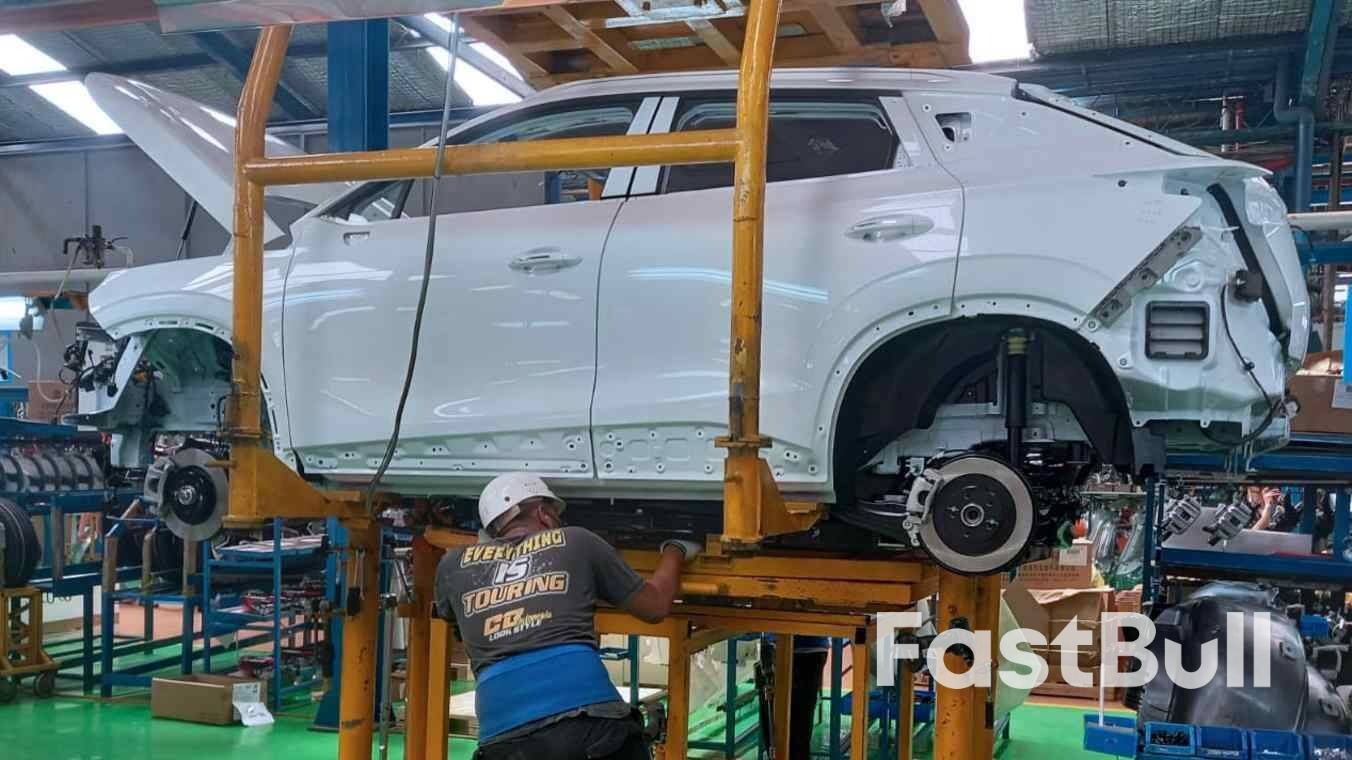
Based on the semi-knocked down (SKD) production model, the Guangzhou-headquartered EV maker's partially assembled vehicles will be completed at EPMB's facility in Malacca, about 110 kilometers south of Kuala Lumpur.
The company did not disclose the specific timing for the production, nor did it announce any manufacturing targets.
The partnership marks Xpeng's third localization push abroad, following its collaborations with Magna Steyr in Austria and Handal Indonesia Motor in Indonesia, both also using the SKD model.
"Establishing a local production project in Malaysia is a significant milestone in Xpeng's global strategy and underscores our long-term commitment to the ASEAN region," said James Wu, vice president at Xpeng.
Xpeng said the Malaysian venture reflects its shift from vehicle exports to localized production, and will also help serve the region's right-hand drive market. The company's cars are currently imported and distributed by Bermaz Auto, a key shareholder of EPMB.
Besides Malaysia, Southeast Asian countries with right-hand drive vehicles include Brunei, Indonesia, Thailand and Singapore.
Chinese automakers, including Xpeng, have been reshaping the EV landscape in Southeast Asia, leveraging their price competitiveness, advanced in-car features and strategic partnerships to accelerate localization. Chinese brands now account for more than half of the ASEAN EV market, particularly in Thailand and Indonesia, through names such as BYD, Chery and MG.
Backed by various incentives offered by local governments transitioning to clean energy, their presence has eroded the longstanding dominance of Japanese automakers, whose cautious approach to electrification has left gaps in the market.
See also
Auto assembler Handal rides China's EV expansion into Indonesia
Xpeng's partnership strategy in Malaysia appears aimed at capitalizing on the country's excise-duty exemption for locally assembled EVs, as the tax break for fully imported EVs will be scrapped by the end of 2025. Local production will also help optimize supply-chain costs and improve operational efficiency, the company said, allowing it to tap its local partner's "mature manufacturing experience and market insights."
"Together, we are committed to delivering high-quality, intelligent EVs to Malaysian consumers and supporting the nation's sustainable industrial ambitions," said Hamidon Abdullah, founder and executive chairman of EPMB, an original equipment manufacturer.
Malaysia, which aims for EVs to account for 20% of total industry volume by 2030, topped unit sales in Southeast Asia in the first 10 months of the year with 655,328 vehicles, according to automotive research firm MarkLines.
Prior to its partnership with Xpeng, EPMB had struck similar deals with Chinese state-owned automakers SAIC Motor and BAIC Motor, as well as Great Wall Motor. The Kuala Lumpur-listed company also supplies parts to other Malaysia-based automakers, including Proton, Perodua, Honda and Mazda.
In a stock market filing on Monday, EPMB said it will begin assembling the Xpeng G6, a sedan, by March 31, and the X9, a multipurpose vehicle, by May 25.
Xpeng, which currently offers four types of premium vehicles, delivered 391,937 vehicles in the first 11 months of the year, up 156% from the same period in 2024. Over the same time frame, its overseas deliveries reached 39,800 vehicles, a 95% increase from a year earlier, supported by a sales and service network that spans 52 countries and regions.


