

Trump-Xi Call Reveals Deep Divide on Taiwan
 King Ten
Trump-Xi dialogue highlights US-China divergence on Taiwan's status while hinting at economic cooperation.
A lengthy two-hour phone call between President Trump and President Xi on Wednesday painted two starkly different pictures of the U.S.-China relationship. While Trump celebrated the conversation as "excellent" and "thorough," the official Chinese summary revealed a more contentious discussion centered on Beijing's core interests.
Xi's "Red Line" on Taiwan
According to Beijing's readout, Xi Jinping dedicated a significant portion of the call to Taiwan, which he described as "the most important issue in China-U.S. relations." He delivered a direct warning, declaring that China "will never allow Taiwan to be separated from China."
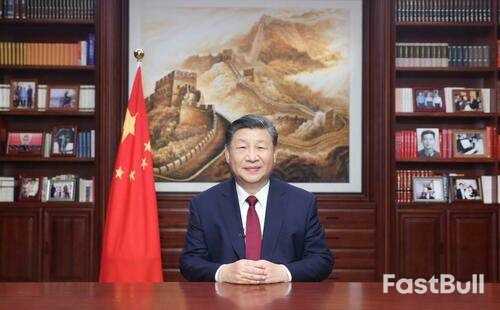
Chinese President Xi Jinping's official portrait backdrop underscores the nationalistic tone of his warnings to the U.S. over Taiwan.
Xi specifically targeted Washington's ongoing military support for the self-ruled island, stating, "The US must handle arms sales to Taiwan with extreme caution." This was a clear reference to the billions in arms packages approved by multiple U.S. administrations.
Taipei's Defiant Response
Taiwan responded quickly to the details of the call. President Lai Ching-te told reporters on Thursday that the bilateral relationship remains strong. "The Taiwan-US relationship is rock solid, and all cooperation projects will continue uninterrupted," he affirmed.
Separately, Taiwan's foreign ministry highlighted that U.S. weapons sales are proceeding without interruption, despite Xi's warnings.
An Olive Branch on Trade
Despite the geopolitical friction, the call also contained a potential economic goodwill gesture. President Trump announced that China is considering a substantial increase in its purchases of U.S.-farmed soybeans, from 12 million tons to 20 million metric tons for the current season. The news prompted a rally in soybean futures.
Trump's Optimism Clashes with Military Reality
President Trump has consistently emphasized the importance of maintaining open communication with Beijing. Following the call, he posted on Truth Social, "The relationship with China, and my personal relationship with President Xi, is an extremely good one, and we both realize how important it is to keep it that way." He added, "I believe that there will be many positive results achieved over the next three years of my Presidency."
However, this optimistic tone contrasts with recent actions. In December, the U.S. State Department announced its largest-ever arms sale package to Taiwan, valued at over $11.1 billion and including missiles, artillery systems, and drones. The package still requires approval from Congress.
China's reaction to that proposal was swift and angry, culminating in two days of large-scale military drills involving air, navy, and missile units around Taiwan in late December.


