

Trump's Venezuela Oil Plan Faces a Saturated Global Market
 Daniel Foster
Trump's Venezuela oil plan faces a global glut, investor caution, and US shale risks.
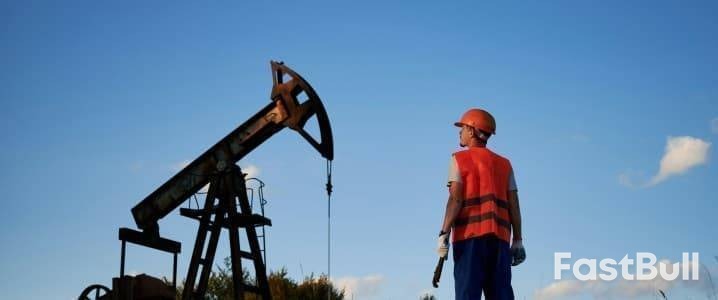
Following the ouster of Venezuelan leader Nicholas Maduro on January 3, the Trump administration is moving to capitalize on the nation’s vast oil reserves, the largest in the world. The U.S. Department of Energy has already begun organizing the sale of approximately 50 million barrels of Venezuelan oil seized from tankers stranded by a recent blockade.
"The first sale has already occurred and the sales will continue indefinitely," a department spokesperson confirmed. The stated goal is to build an American "oil empire" powerful enough to challenge OPEC.
While major oil companies are reportedly assessing Venezuela's drilling assets, a critical question remains: in a world already awash with oil, is there enough demand to absorb a Venezuelan production revival?
A Collision with the Global Oil Glut
The global oil market is already oversaturated. With prices hovering around $60 per barrel, producers are struggling with a persistent supply glut. Projections for 2026 already indicate that production will outpace demand, a situation worsened by OPEC's recent reversal of production cuts.
Venezuela has the potential to significantly amplify this surplus. Experts believe the country could increase its output by 50% without substantial new investment, referencing its peak production of over 3.7 million barrels a day in the 1970s. While the infrastructure and precedent exist, unleashing this supply could drive global prices down further.
A Nightmare Scenario for US Shale
For American shale producers, a flood of cheap Venezuelan crude onto the market is a deeply unwelcome prospect. The U.S. oil industry is already showing signs of strain. In Texas, the number of operating rigs has fallen by nearly 15% this year as companies wait for prices to recover.
This slowdown is having a real economic impact across West Texas. "It has really cast a shadow over the Permian," Ben Shepperd, president of the Permian Basin Petroleum Association, recently told the Wall Street Journal. Adding millions of barrels of new supply would only intensify this pressure.
Trump's Vision vs. Investor Reality
President Trump has been explicit about his plan, stating that large U.S. oil companies would "go in, spend billions of dollars, fix the badly broken infrastructure, and start making money." He declared, "We're in the oil business."
However, it's not clear that the oil majors share this enthusiasm. Industry analysts point out that investor priorities are not aligned with a policy of "energy dominance."
"Investors don't care about energy dominance," said Clayton Seigle, a senior energy security analyst at the Center for Strategic and International Studies. "They care about energy dividends." If boosting global supply suppresses prices and hurts profits, the financial incentive for Big Oil to invest heavily in Venezuela may be limited.
Outdated Tactics in a Modern Market
Some policy experts argue that the administration's approach misunderstands the fundamentals of the 21st-century energy market. A recent analysis in Foreign Policy noted that today's oil system thrives on "deep, liquid, transparent global markets supported by the dollar and a diversity of suppliers," not on imperial control.
This modern system has been highly beneficial to U.S. energy security. The article argues that "Trump's rhetoric about 'controlling' Venezuelan oil... risks undermining the very advantages the United States enjoys." Attempting to manage Venezuela's oil sector directly could disrupt the free-trade principles that have stabilized the market for decades.
A Potential Lifeline for Venezuela
While the global implications are complex, the revitalization of its oil industry could be transformative for Venezuela's shattered economy.
"Recent events have completely changed the economic outlook," Venezuelan economist Asdrubal Oliveros explained to the New York Times. Even with foreign companies profiting, he noted, "Oil production could fuel a real economic takeoff."


