

CSRC Targets Tiger Brokers, Futu, and Longbridge in Major Cross-Border Trading Crackdown
 zhan chen
China’s CSRC has launched formal penalties against Tiger Brokers, Futu, and Longbridge, signaling a major escalation in China’s cross-border trading crackdown.
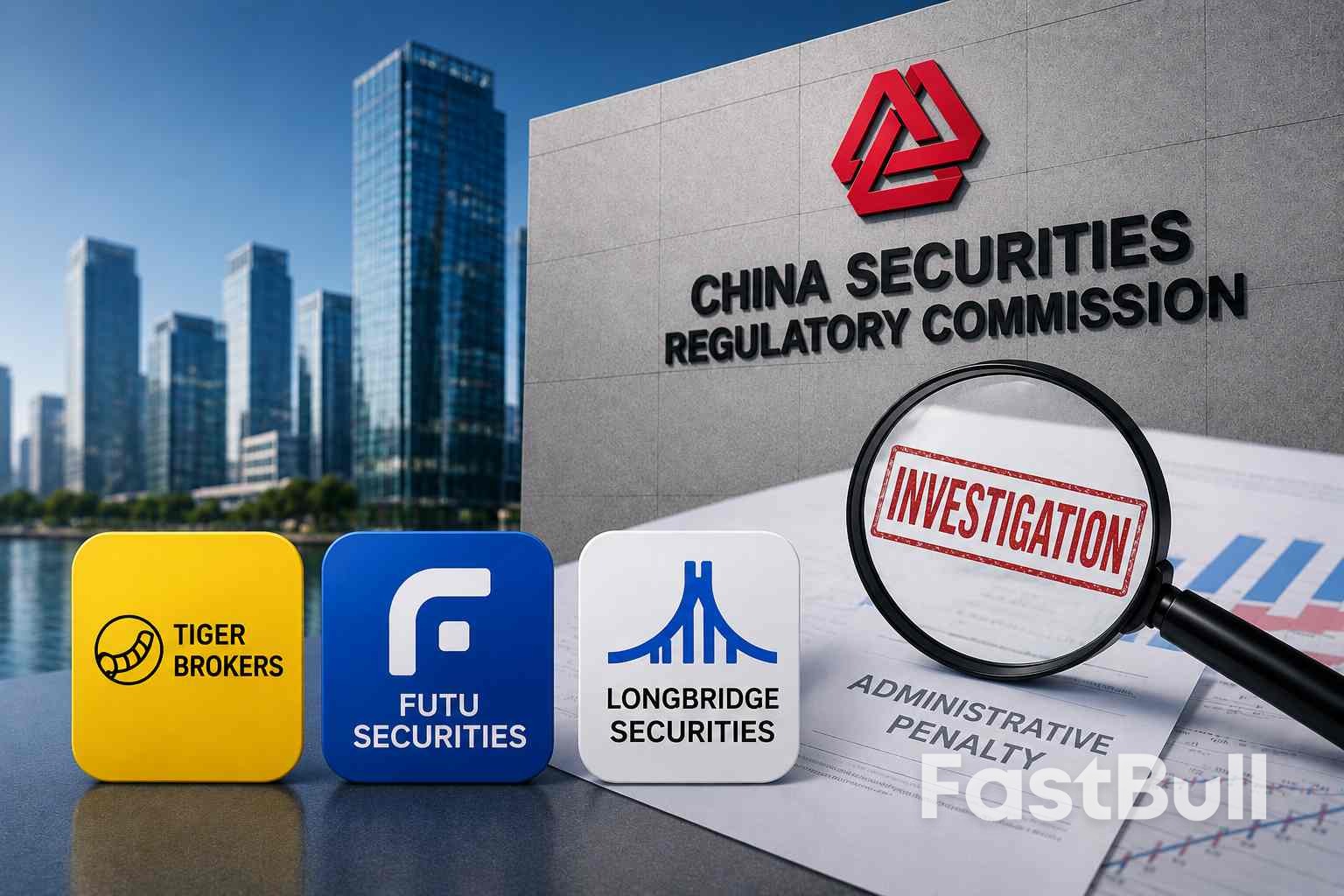
On May 22, the China Securities Regulatory Commission (CSRC) officially announced administrative penalty notices against Tiger Brokers, Futu Holdings, and Longbridge over illegal cross-border securities operations.
According to the CSRC, the related domestic and overseas entities of the three firms operated securities brokerage and margin financing businesses in mainland China without regulatory approval or proper licenses. The firms were accused of conducting securities marketing activities, processing trading instructions, and generating related profits inside China.
The regulator also stated that some activities involved illegal public fund sales and illegal futures brokerage services. The CSRC clearly stated that it plans to:
“Confiscate all illegal gains obtained by the related entities of Tiger Brokers, Futu Holdings, and Longbridge, and impose severe penalties according to law.”
Compared with the 2022 regulatory approach focused on “stopping new mainland users” and “resolving existing business operations,” this latest move signals a much stricter enforcement phase.
The CSRC also emphasized that China will continue cracking down on illegal securities operations conducted by overseas institutions inside mainland China. This suggests that China’s regulation of cross-border online brokerages is shifting from “rectification” to full-scale enforcement.
Contents
Why Did Chinese Regulators Escalate the Crackdown?
One major reason this case shocked the market is the clear escalation in regulatory language.
When the CSRC first named Futu Holdings and Tiger Brokers in 2022, the overall tone focused more on “rectification” and “compliance adjustments.” At that time, regulators mainly aimed to stop new mainland users while gradually resolving existing business operations. Most investors believed existing users could continue trading in the short term.
But this time is very different.
The latest announcement confirms that regulators have formally opened investigations and issued advance notices of administrative penalties. The CSRC directly stated:
“Confiscate all illegal gains obtained by the related entities of Tiger Brokers, Futu Holdings, and Longbridge, and impose severe penalties according to law.”
Compared with previous wording such as “rectification” and “standardization,” this clearly marks a formal enforcement stage.
More importantly, the scope of violations is broader than many expected. Besides illegal securities operations, regulators also accused the firms of illegal public fund sales and illegal futures brokerage activities.
This means Chinese regulators are no longer only targeting “cross-border account opening,” but are now tightening oversight over the entire business model of overseas institutions providing securities, fund, and futures services inside mainland China.
Why Was Longbridge Named for the First Time?
Compared with Tiger Brokers and Futu Holdings, Longbridge’s inclusion surprised many market observers.
During the 2022 crackdown, regulators mainly targeted Tiger Brokers and Futu Holdings publicly. Although Longbridge operated under a similar cross-border online brokerage model, it was not formally named at the time.
However, over the past two years, the regulatory focus has gradually shifted from targeting individual platforms to tightening the entire business category.
Especially after Chinese regulators launched a multi-agency crackdown on illegal cross-border securities, futures, and fund operations in 2024, the focus moved beyond simply restricting new accounts.
Authorities began systematically tightening overseas institutions’ business activities inside mainland China.
From this perspective, Longbridge being added to the penalty list suggests regulators are now targeting the broader cross-border online brokerage model itself.
Why Is This Different From 2022?
Many investors reacted to the news by asking:
“Didn’t regulators already crack down on this in 2022?”
The key difference is that the 2022 measures mainly focused on rectification, while this time regulators have clearly entered a formal administrative punishment stage.
Back in late 2022, the main regulatory requirements were:
- Stop onboarding new mainland clients
- Stop opening new accounts
- Gradually resolve existing business operations
At the time, the market generally believed regulators mainly wanted to stop future growth rather than immediately shut down existing users.
But this time is clearly different.
The CSRC has formally launched investigations and issued advance notices of penalties, while also stating:
“Confiscate all illegal gains obtained by the related entities of Tiger Brokers, Futu Holdings, and Longbridge, and impose severe penalties according to law.”
This is a far stronger enforcement signal than previous “rectification” language.
China’s regulation of cross-border online brokerages has steadily intensified over the past few years.
| Year | Regulatory Action | Key Change |
|---|---|---|
| 2022 | Futu Holdings and Tiger Brokers targeted | New mainland users restricted |
| 2023 | Rectification plans released | Existing business gradually resolved |
| 2024 | Multi-agency crackdown launched | Illegal cross-border operations tightened |
| 2026 | Formal administrative penalties announced | Illegal gains to be confiscated |
This is why many investors now believe the situation has fundamentally changed.
The Biggest Question for Chinese Users: Can They Still Trade?
After the latest crackdown, the market’s biggest concern is no longer whether regulators will impose penalties, but:
Can mainland Chinese users still trade Hong Kong and U.S. stocks through Tiger Brokers, Futu Holdings, and Longbridge?
For existing users with active positions, the biggest concerns include:
- Will accounts be frozen?
- Can funds still be withdrawn?
- Can users continue buying stocks?
- Will the apps eventually stop working?
Based on currently available information, regulators do not appear to be pursuing an immediate “one-size-fits-all shutdown.” Instead, they are gradually tightening the overall cross-border online brokerage model.
Will Existing Accounts Be Affected?
So far, Chinese regulators still appear to be targeting illegal cross-border operations rather than directly targeting individual investor accounts.
Both the 2022 crackdown and later rectification plans emphasized the “orderly resolution of existing business” while protecting investors’ legitimate assets.
Authorities have not announced measures such as:
- Forced liquidation
- Frozen customer assets
- Banned withdrawals
For existing users, the more likely short-term outcome is a gradual transition period rather than an immediate shutdown.
Can Users Still Buy Hong Kong and U.S. Stocks?
This remains one of the market’s most sensitive questions.
The CSRC announcement itself does not explicitly mention “banning trading” or “banning positions.” However, the regulatory direction has become increasingly clear over recent years:
- Restrict new mainland users
- Restrict new capital inflows
- Gradually reduce cross-border brokerage operations inside China
In the 2023 rectification plan, regulators already stated that platforms should not accept new mainland investors or new mainland funds.
Some Chinese financial media reports citing related rectification plans have suggested that certain platforms could eventually enter a “sell-only” transition phase. Under such a model, users may still be allowed to sell holdings and withdraw funds, but would no longer be able to open new positions or add capital.
However, this wording does not currently appear directly in the latest CSRC announcement.
This suggests that while trading may not stop immediately, the long-term space for mainland investors to directly trade Hong Kong and U.S. stocks through cross-border online brokers is gradually shrinking.
What Does the Two-Year Transition Period Mean?
The “two-year transition period” has also become a major topic in the market.
This concept mainly comes from the 2024 multi-agency crackdown on illegal cross-border securities, futures, and fund operations. According to several Chinese financial media reports, regulators planned a transition period of roughly two years to gradually resolve existing business operations.
In simple terms, this resembles a “soft exit.”
Rather than forcing all platforms to stop operating immediately, regulators appear to be gradually reducing their business scale inside mainland China through:
- Stopping new account openings
- Restricting new capital inflows
- Reducing domestic marketing activities
- Gradually dismantling cross-border business chains
For many investors, this means the bigger question may no longer be whether trading is still possible today, but whether these channels will continue to exist several years from now.
The Era of Easy Cross-Border Stock Trading May Be Changing
Platforms such as Webull, moomoo, and Interactive Brokers are also increasingly being discussed because they provide similar cross-border trading access to Chinese investors.
Platforms like Tiger Brokers, Futu Holdings, and Longbridge grew rapidly because they matched rising demand among Chinese investors for overseas asset allocation.
Compared with traditional brokerages, these apps offered:
- Simpler account opening
- Lower barriers to entry
- More user-friendly trading experiences
- Direct access to Hong Kong and U.S. stock markets
During the strong rally in U.S. technology stocks, many younger Chinese investors entered overseas markets for the first time through these apps.
However, from a regulatory perspective, one core issue has always remained:
These platforms hold overseas licenses but have long provided securities-related services directly to mainland Chinese investors.
In recent years, Chinese regulators have not primarily targeted overseas stock investing itself, but rather:
- Domestic customer acquisition
- Cross-border account opening
- Domestic marketing activities
- Domestic trading-related services
- The entire cross-border trading chain
This explains why the regulatory logic has remained highly consistent from 2022 to 2026:
Without mainland Chinese authorization, institutions cannot continuously operate securities-related businesses inside China.
Because of this, market concerns are now expanding beyond Tiger Brokers, Futu Holdings, and Longbridge.
That said, Chinese regulators have so far only formally named Tiger Brokers, Futu Holdings, and Longbridge in administrative penalty proceedings.
No similar official penalty notices have been announced for other platforms at this stage.
Still, one industry trend is becoming increasingly clear:
The era of low-barrier direct access to Hong Kong and U.S. stock trading from mainland China may gradually be coming to an end.
Future cross-border investing channels are likely to become increasingly:
- License-driven
- Compliance-focused
- Locally regulated
For ordinary investors, the bigger adjustment may not simply be whether one platform remains available, but how mainland Chinese investors access overseas markets in the future.


