

Silver Prices Tumble After Trump Rejects Tariffs
 Diana Wallace
Silver retreated after the U.S. deferred import tariffs, yet analysts foresee structural deficits sustaining its value.
Silver's volatile start to the year has taken a sharp turn, with prices falling after President Donald Trump confirmed the U.S. would not impose import tariffs on the precious metal and other critical minerals for now. The decision offers a temporary reprieve to a market that had rallied 30% in the new year amid escalating supply concerns.
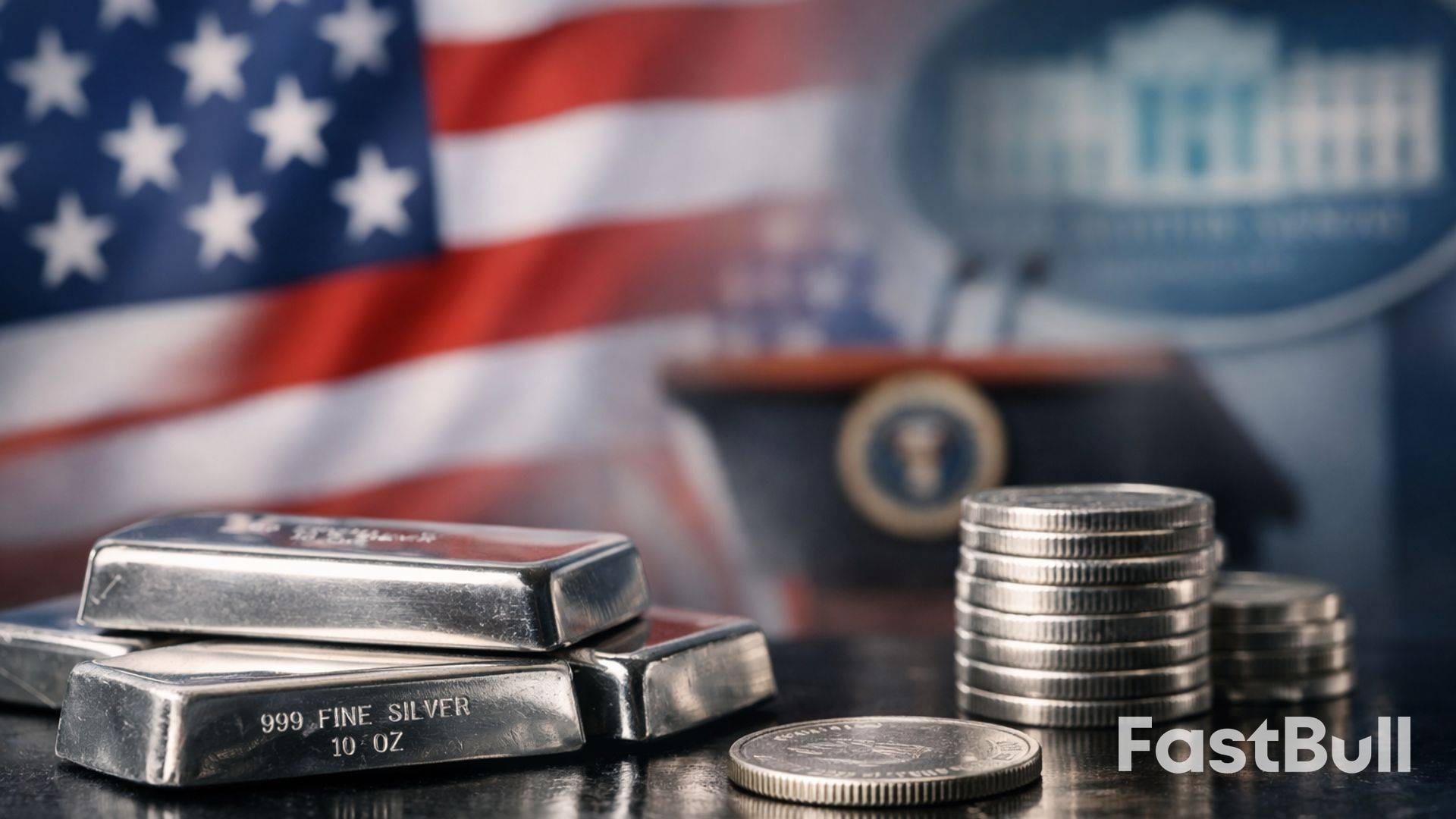
White House Opts for Negotiation Over Tariffs
In a series of proclamations, the White House announced it will not apply tariffs on processed critical minerals and their derivative products. Instead, the administration plans to pursue new trade agreements to bolster the supply of these materials, based on recommendations from the Secretary of Commerce.
The statement highlighted the nation's dependence on foreign sources, noting that the U.S. lacks sufficient production capacity for processed minerals. As of 2024, the United States was 100% reliant on net imports for 12 critical minerals and at least 50% reliant for another 29.
"The Secretary recommended that I negotiate agreements with foreign nations to ensure the United States has adequate critical mineral supplies and to mitigate the supply chain vulnerabilities as quickly as possible," the White House stated.
However, the administration left the door open for future trade restrictions, adding that it may be "appropriate to impose import restrictions, such as tariffs, if satisfactory agreements are not reached in a timely manner."
Immediate Market Impact: Silver Retreats from Highs
The news triggered significant selling in the silver market. After touching a high of $93 an ounce, spot silver last traded at $90.09 an ounce, a decline of more than 3% on the day. Despite the drop, prices showed some resilience by bouncing off lows near $86 an ounce.
Analysts believe the removal of the immediate tariff threat could ease liquidity issues that have plagued the silver market.
"In the near-term, prices may consolidate in a range as tariff risks are reassessed and positioning normalises," said Ewa Manthey, Commodities Strategist at ING. "However, structural deficits, tight physical availability, and ongoing policy uncertainty suggest downside might be limited, with silver likely to remain well-supported on dips."
Why Tariffs Were on the Table
Market participants had been closely watching for this decision for months. The issue arose in November when silver and Platinum Group Metals (PGMs) were added to the U.S. Geological Survey's (USGS) 2025 List of Critical Minerals. This action prompted a Section 232 tariff investigation, giving the government 90 days to make a ruling.
While gold, silver, and PGMs were exempt from global tariffs imposed last year due to their status as precious metals, fears persisted that silver, platinum, and palladium could face new levies because of their industrial importance.
Although analysts considered tariffs an unlikely outcome, the lingering risk forced market players to maintain high U.S. stockpiles throughout most of 2025. This put immense pressure on the global supply chain, creating liquidity shortages as investment and industrial demand competed for limited supplies in London and China.
Analyst Outlook: Short-Term Weakness, Long-Term Support
While the tariff news has provided some relief to the supply crunch, analysts maintain that the market's underlying structural problems are far from over.
Market analysts at BMO Capital Markets noted that the reactionary sell-off was expected. "As Trump has not categorically ruled out tariffs, we would expect this to be transient," they said.
This view is shared by others who see persistent tightness in the global market. "The immediate heat may be off silver, but we can't expect the tightness to ease dramatically, especially as it's now tight in Asia as well," commented Rhona O'Connell, head of market analysis at StoneX.
While U.S. supply issues have been addressed temporarily, the physical market remains sensitive to other potential disruptions, including China's new export restrictions. However, analysts at Metals Focus suggest these fears may be exaggerated.
"Exporting silver from mainland China has always required a licence, and the list of qualifying companies is reviewed every two years," the firm explained. "This policy should not be interpreted as an export ban or a material shift in China's stance on silver exports. Instead, it represents a move towards stricter management of export licensing."
Metals Focus anticipates that as inventories in London recover and Chinese exports normalize, the market dislocation will gradually ease. This could create some short-term price weakness, but they expect investors will quickly buy the dip, leading to "further upside for the silver price over the foreseeable future."
Looking ahead, the firm expects ongoing supply issues to fuel volatility. A shortage of high-grade refining capacity has slowed the return of scrap silver to the market. This, "combined with an ongoing structural deficit in 2026, [means] above-ground bullion inventories have not been rebuilt as quickly as might have been expected."


