

Russia, Ukraine & US Talks: 5 Key Issues to Watch
 King Ten
Trilateral talks reveal Russia's policy shift; Donetsk and a Donbass-for-security deal dominate evolving diplomacy.
A second round of trilateral talks between Russia, Ukraine, and the United States is scheduled for February 1 in Abu Dhabi, according to Kremlin spokesman Dmitry Peskov. Russia's participation marks a significant policy shift, bringing the US directly into negotiations.
While details from the first round remain scarce, public statements and recent reports offer crucial clues into the high-stakes discussions. Here are five critical insights into the evolving diplomatic landscape.
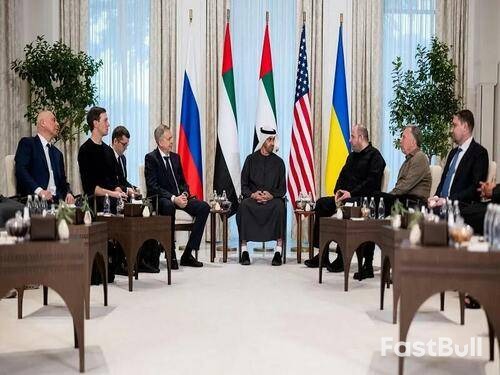
Figure 1: Officials gather for trilateral talks in Abu Dhabi, a diplomatic format that signals a major policy shift for Russia.
Donetsk: The Final Sticking Point?
Territory appears to be the central unresolved issue. On the eve of the initial talks, top Putin aide Yuri Ushakov stated that a lasting settlement was unlikely without addressing the territorial issue based on a previously agreed-upon formula.
This was echoed last week by US Secretary of State Marco Rubio, who told the Senate Foreign Relations Committee, "The one remaining item … is the territorial claim on Donetsk." This lends credibility to earlier reports that Russia is demanding Ukraine's withdrawal from Donbass.
A Post-Conflict NATO Deployment Is on the Table
Discussions are also underway regarding post-conflict security arrangements. Rubio revealed that "security guarantees basically involve the deployment of a handful of European troops, primarily French and the UK, and then a US backstop," a move that would require Russia's consent.
However, the US is still debating its commitment to a potential future conflict. This follows earlier signals from Steve Witkoff and Jared Kushner indicating American support for NATO troops in Ukraine. This topic will likely be a key focus in the upcoming second round of negotiations.
The Potential 'Quid Pro Quo' for Peace
A potential trade-off may be emerging. According to the Financial Times, US security guarantees for Ukraine are contingent on its withdrawal from Donbass. The New York Times adds that the Kiev-controlled portion of the region could become a demilitarized zone or host neutral peacekeepers.
This suggests a possible deal: Ukraine cedes control of Donbass in exchange for US security guarantees and a NATO military presence. Russia might agree to such terms if neutral peacekeepers serve as a buffer.
Trump's Cautious Approach to Pressuring Zelensky
Despite the promise of this potential arrangement, Ukrainian President Zelensky remains defiant about withdrawing from Donbass. For his part, President Trump has avoided publicly pressuring Zelensky with tangible consequences, such as halting arms sales to the EU destined for Ukraine.
This suggests there are clear limits to how far the United States is willing to go to secure a deal, even as it facilitates the talks.
Why Russia Agreed to US Involvement
Despite these limitations, the US diplomatic role has become indispensable. Russia's agreement to expand bilateral talks with Ukraine into a trilateral format is a major change in its foreign policy. This indicates that Moscow believes Washington is sincere in its efforts to negotiate an agreement, even if it won't use all its leverage.
With the US now formally at the table, the talks are unlikely to revert to a bilateral format unless the conflict is still ongoing by the time of a potential Trump 2.0 administration.
Overall, these developments suggest that President Putin may be considering significant compromises on the maximum goals set at the beginning of the special operation. While it is too early to draw definitive conclusions, any official agreement—whether a ceasefire, armistice, or peace treaty—will be heavily analyzed to understand the strategic calculations behind Russia's evolving position.


