

New START Treaty Expires, Raising Nuclear Arms Race Fears
 James Riley
New START treaty expires, leaving US-Russia nuclear arsenals unchecked and fueling global arms race fears.
The last remaining nuclear arms control treaty between the United States and Russia expired Thursday, removing caps on the world's two largest atomic arsenals for the first time in over 50 years and fueling expert warnings of a new, unconstrained arms race.
As the New START treaty officially ended, U.S. President Donald Trump renewed his call for a stronger, modernized pact to replace it, emphasizing that any new agreement must include China. The Kremlin, meanwhile, expressed regret over the treaty's expiration, a sentiment echoed by arms control advocates concerned about global stability.
Trump Pushes for New Treaty, Demands China's Inclusion
President Trump has been a vocal critic of the existing agreement, framing it as a flawed deal for the United States. In a social media post, he argued against extending the pact.
"Rather than extend 'NEW START' (A badly negotiated deal by the United States that, aside from everything else, is being grossly violated), we should have our Nuclear Experts work on a new, improved, and modernized Treaty that can last long into the future," Trump stated.
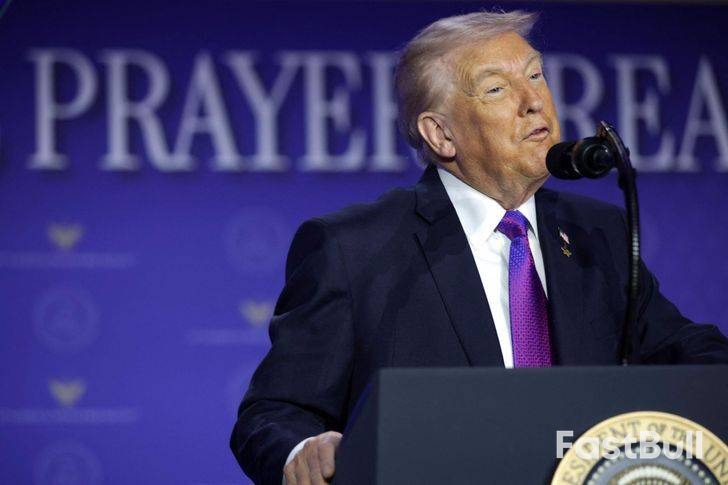
Figure 1: Donald Trump, who has called for a new, modernized nuclear treaty, speaks at an event. His administration has pushed for China's inclusion in future arms control talks.
A central pillar of Trump's position is the necessity of bringing China into any future negotiations. U.S. Secretary of State Marco Rubio reiterated this stance, stating that "in order to have true arms control in the 21st century, it's impossible to do something that doesn't include China because of their vast and rapidly growing stockpile."
During his first term, Trump's administration attempted to broker a three-way nuclear pact involving China, but the effort was unsuccessful.
Russia Laments Pact's End, Warns of Instability
Moscow officially views the treaty's expiration "negatively," according to Kremlin spokesman Dmitry Peskov. He stated that Russia will maintain a "responsible, thorough approach to stability when it comes to nuclear weapons" while being guided by its national interests.
Russian President Vladimir Putin had previously declared his readiness to extend the treaty's limits for another year, an offer the U.S. did not commit to. In a discussion with Chinese leader Xi Jinping, Putin noted the U.S. failure to respond to his proposal.
The Russian Foreign Ministry issued a statement confirming that Moscow "remains ready to take decisive military-technical measures to counter potential additional threats to the national security" but is also open to diplomatic solutions if the right conditions emerge.
What Was the New START Treaty?
Signed in 2010 by then-President Barack Obama and his Russian counterpart, Dmitry Medvedev, the New START treaty placed clear limits on nuclear stockpiles. It restricted each nation to:
• A maximum of 1,550 deployed nuclear warheads.
• A maximum of 700 deployed missiles and bombers.
The treaty, which included on-site inspections to verify compliance, was extended for five years in 2021. However, inspections were halted in 2020 due to the COVID-19 pandemic and never resumed. In February 2023, Putin suspended Moscow's participation, citing a lack of U.S. cooperation.
China Rejects Role in Trilateral Nuclear Arms Control
Beijing has consistently rejected calls to join nuclear disarmament negotiations, arguing that its arsenal is not comparable to those of the U.S. and Russia.
"China's nuclear forces are not at all on the same scale as those of the U.S. and Russia, and thus China will not participate in nuclear disarmament negotiations at the current stage," said Foreign Ministry spokesperson Lin Jian. He urged the U.S. to resume its nuclear dialogue with Russia.
Moscow has reaffirmed that it respects Beijing's position. Russian officials have suggested that if the treaty framework is to be expanded, it should also include the nuclear arsenals of NATO members France and the United Kingdom.
Experts Fear a New Global Arms Race
The end of New START has been met with alarm by arms control experts, who see it as a trigger for a dangerous period of strategic competition.
Daryl Kimball, executive director of the Arms Control Association, warned of the potential consequences if the U.S. increases its deployed strategic arsenal. He argued it would "only lead Russia to follow suit and encourage China to accelerate its ongoing strategic buildup."
"Such a scenario could lead to a years-long, dangerous three-way nuclear arms buildup," Kimball said.
Despite the treaty's termination, there was one sign of continued communication. The U.S. and Russia agreed Thursday to reestablish a high-level, military-to-military dialogue that had been suspended in 2021.


