

Gold at $4,500? BofA Unveils Bullish 2026 Metals Forecast
 Michael Ross
Bank of America projects gold averaging $4,538 by 2026, with silver potentially soaring to $309 amid tightening markets.
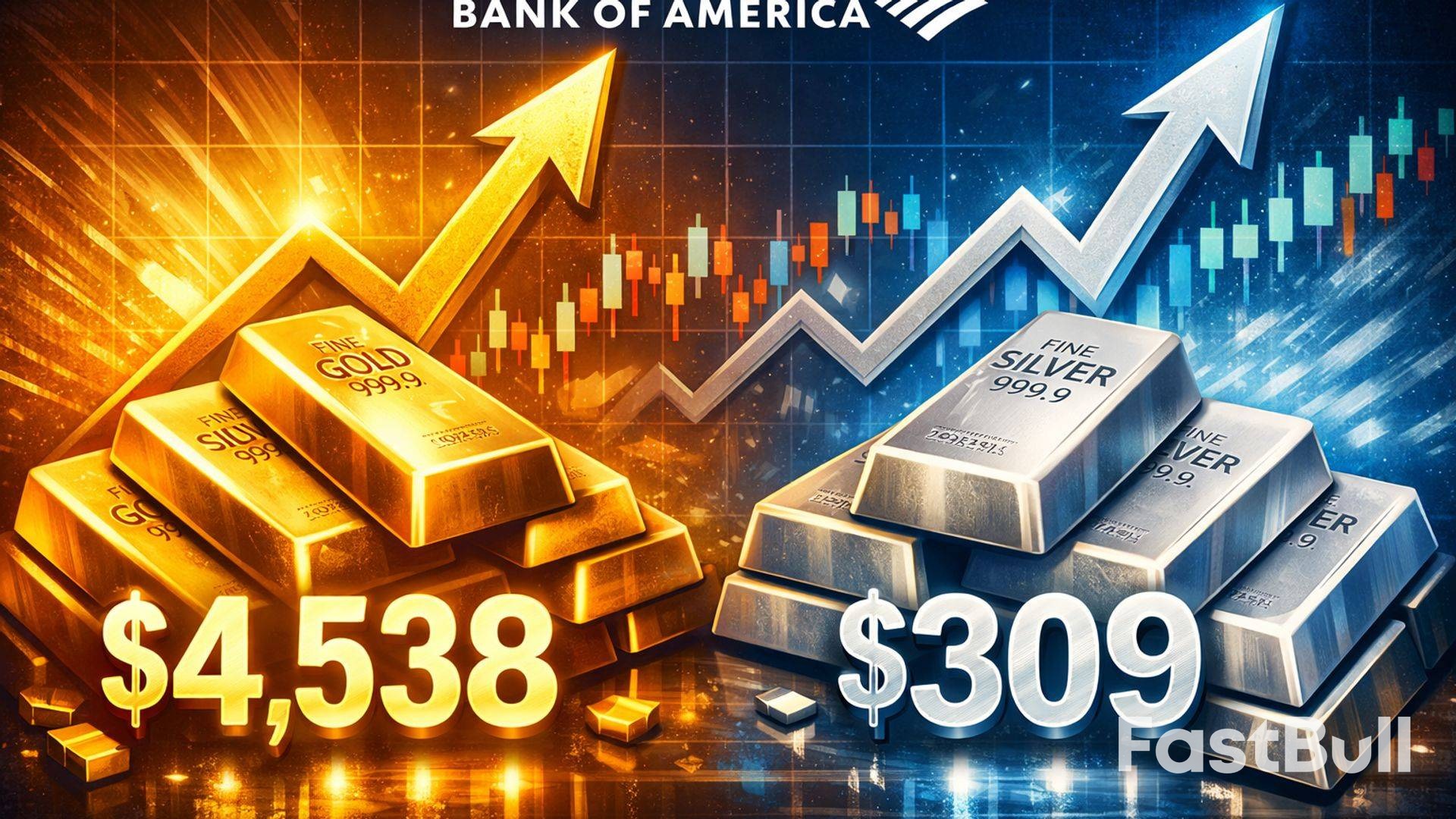
Bank of America has outlined a strong bullish case for precious metals, projecting gold will remain a crucial portfolio hedge and average $4,538 per ounce in 2026. Michael Widmer, the bank's Head of Metals Research, also highlighted silver's explosive potential, suggesting historical trends could push its price to between $135 and $309.
In a recent report, Widmer emphasized gold's role as both a hedge and a source of alpha, driven by tightening market conditions. This outlook is supported by a detailed analysis of the mining sector and broader investment trends.
Gold Forecast Driven by Supply Squeeze and Rising Costs
Bank of America's 2026 projection is rooted in expectations of falling supply and increasing operational costs for gold producers.
Key forecasts for the mining sector include:
• Production Decline: The 13 major North American gold miners are expected to produce 19.2 million ounces, a 2% decrease from 2025, challenging more optimistic market forecasts.
• Higher Costs: Average all-in sustaining costs (AISC) are projected to rise by 3% to approximately $1,600 per ounce, slightly above the consensus.
• Surging Profitability: Despite rising costs, producers are forecast to see a 41% increase in total EBITDA, reaching around $65 billion in 2026.
While gold is set to average $4,538 per ounce in real terms, the bank also anticipates higher prices for silver, platinum, and palladium.
Silver's Potential to Outperform Gold
For investors with a higher risk appetite, silver may present an even more compelling opportunity. Widmer noted that the current gold-to-silver ratio of around 59 suggests silver remains undervalued relative to gold and could outperform.
Historical ratio analysis reveals significant upside:
• A return to the 2011 low of 32 implies a silver price of $135.
• Revisiting the 1980 low of 14 suggests a potential silver price of $309.
This makes silver a high-beta play on the broader precious metals rally.
The "Underinvested" Bull Market in Gold
Despite gold's strong performance, Widmer argues that the market is "overbought but still underinvested," indicating significant room for growth. He explained that bull rallies in gold typically end only when their fundamental drivers fade, not simply because prices have risen.
Bank of America sees gold prices pushing toward $5,000 an ounce in 2026, a target that would require only a 14% increase in investment demand—a level consistent with recent quarters. A more aggressive scenario, pushing gold to $8,000, would need a 55% jump in investment demand.
While retail interest is strong, with inflows into gold-backed ETFs hitting their highest levels since 2020, a key segment remains on the sidelines. High-net-worth investors hold just 0.5% of their assets in gold, representing a massive pool of potential future demand.
Why Portfolios Need More Gold Exposure
The renewed interest in gold comes as the reliability of the traditional 60/40 stock-and-bond portfolio is increasingly questioned. Widmer's research suggests that a 20% allocation to gold can be an effective strategy for modern portfolios. "You can actually justify that retail investors should have a gold share of well above 20%," he said. "You can even justify 30% at the moment."
This diversification logic extends beyond individual investors to the world's largest institutions: central banks. Widmer expects them to continue their gold purchasing spree, noting that their gold reserves have already surpassed their holdings of U.S. Treasuries. Gold currently makes up about 15% of total central bank reserves, but BofA's modeling suggests an optimal allocation is closer to 30%.
"Whichever portfolio you're looking at, whether it's a central bank portfolio or an institutional portfolio, they can benefit from diversification into gold," Widmer stated.
Monetary Policy: The Next Catalyst for Precious Metals
Looking ahead to 2026, U.S. monetary policy will be a critical factor. Widmer's analysis shows that during historical easing cycles where inflation remains above 2%, gold prices have risen by an average of 13%.
This rally does not require aggressive rate cuts. "You don't even need to see cuts at every meeting," he explained. "You just need to see that rates are going down." As one of the best-performing assets in recent years, gold's price action is becoming too significant for portfolio managers to ignore.


