

EU-India Trade Deal to Reshape Auto Market
 Owen Li
EU-India's landmark trade deal slashes car tariffs, positioning India as a vital auto manufacturing hub, yet local production remains crucial.
A landmark trade deal between the European Union and India is set to dramatically lower import tariffs on European cars, a move analysts believe will encourage greater manufacturing investment in the world's third-largest auto market.
The agreement, expected to be ratified early next year, will see India gradually reduce its steep import duties on cars from the 27-nation bloc from as high as 110% down to 10% over the next five to ten years.
Analyzing the New Tariff Structure and Quotas
While full details remain unpublished, European industry sources indicate the agreement includes specific quotas for vehicles with internal combustion engines and mild hybrids.
• Initial Quota: The deal will start with an annual quota of 100,000 units.
• Expansion: This quota will increase to 160,000 units after five years.
Notably, full battery electric vehicles (EVs) and plug-in hybrid electric vehicles (PHEVs) will not receive any tariff reductions during the first five years of the agreement.
Why Local Manufacturing Still Wins in India
Despite the tariff cuts, analysts argue that local production remains essential for any European brand seeking significant market share in India. The import quotas represent only a fraction of the country's massive market.
"Importing is, normally in all markets, an entry strategy or for lower volumes," explained Mattias Bergman, CEO of Mobility Sweden. "To reach larger volumes, you need local assembly in some format."
India's auto market is a global powerhouse. Around 4.5 million passenger cars were sold there in 2025, marking annual growth of over 5% and solidifying its position behind only China and the U.S. The German Association of the Automotive Industry (VDA) projects another 4% growth this year, highlighting the immense potential in a country with only 34.3 cars per 1,000 people, compared to 585.3 in the EU.
A 'Mini-China'? India's Potential as a Production Hub
The deal could position India as a strategic, low-cost production base for European automakers, serving both its growing domestic demand and acting as an export hub for Asia and even Europe itself.
"With India as a low-cost production location, there is an opportunity to strengthen the position in the Asian region," said Ferdinand Dudenhoeffer, director at Germany's Center for Automotive Research. "Imports into the EU from India could become attractive for suppliers and car manufacturers, such as Volkswagen's Skoda."
Piyush Arora, managing director and CEO of Skoda Auto Volkswagen India, confirmed this strategic view, stating the company would "evaluate the introduction of a wider range of European models for Indian customers" while considering long-term investment.
How the Deal Protects and Benefits Indian Industry
Indian automakers and officials have welcomed the pact, emphasizing that it is structured to protect local interests while encouraging technology transfer. Anish Shah, CEO of Mahindra Group, called the deal a "huge positive," noting it provides duty-free access to European markets and will attract further investment from European OEMs.
He pointed out that the tariff reductions primarily affect higher-priced cars, leaving the competitive landscape for local manufacturers largely unchanged. Commerce and Industry Minister Piyush Goyal echoed this, stating, "[The] Indian industry is very happy that we have been able to protect their areas of interest in the smaller and low-cost automobile sector."
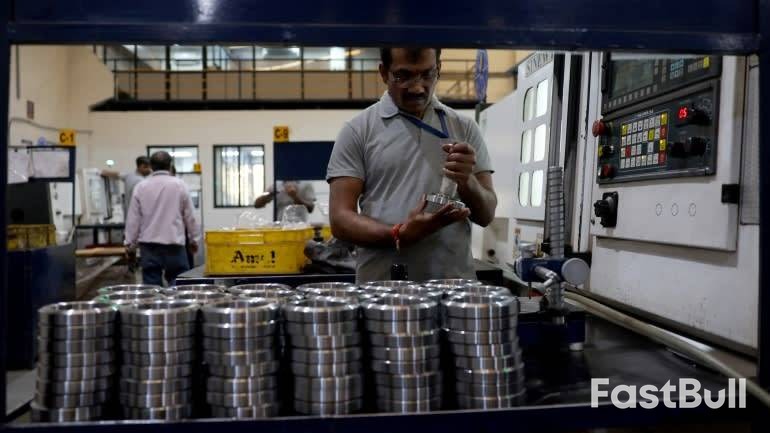
The EU-India trade deal is expected to eliminate tariffs on auto components, providing a major boost for Indian parts manufacturers and strengthening the domestic supply chain.
A Cautious Outlook: Challenges for European Brands
However, some experts remain cautious. Mattias Schmidt of Schmidt Automotive Research noted that European models have historically been too technologically complex and expensive for the Indian market, even when produced locally. At the same time, models designed for India often fail to meet stringent European safety standards, creating natural trade barriers.
"If anyone in India were to benefit from Europe, it would be less-complex automakers like the French manufacturers Renault and Stellantis rather than German manufacturers like Volkswagen or Mercedes," Schmidt said.
Supply Chain Opportunities and R&D Collaboration
The deal is also set to transform the auto components sector, with import tariffs of 15-28% expected to be eliminated over five to ten years.
"A likely outcome is increased collaboration in R&D and product development, particularly as electric-vehicle and software-defined-vehicle intellectual property becomes more important to India's future market," said Avinash Bhosale, a senior automotive analyst at GlobalData.
Indian component makers stand to gain significantly and almost immediately. "This marks a significant boost to India's automotive trade to the EU, as the EU is already the top destination for Indian-made vehicle parts," noted Arushi Kotecha, an automotive analyst at the EIU.
The Broader Geopolitical Context: A Pivot from China?
This agreement arrives amid strained EU trade relations with both the United States and China. German auto exports to China, for example, fell by 35.9% year-on-year in the first nine months of 2025, a revenue drop of 6.1 billion euros ($7.3 billion), according to Destatis.
While India presents a major opportunity, experts warn it cannot be a substitute for China. "The German automotive industry needs to regain strength in China," cautioned Dudenhoeffer. "Saying now that we're going to India and can afford not to make a turnaround in China would be a mistake."


