

Dollar Weakness Is a Common Feature of Government Shutdowns
 Manuel
Summary:
The 35-day closure of federal operations that began in December 2018 delivered the most pronounced bout of dollar weakness — showing the dollar would suffer more the longer the shutdown lasted.
The looming US government shutdown is a clear risk for the dollar.
In the three most recent episodes — in 2013, early 2018 and late 2018 into 2019 — the Bloomberg Dollar Spot Index drifted lower both during the impasse and in the immediate aftermath.
The threatened shutdown is adding to a number of challenges that have kept the dollar under pressure this year — including a new cycle of US interest-rate cuts that kicked off this month and attacks on the Federal Reserve’s independence by the Trump administration.
The 35-day closure of federal operations that began in December 2018 delivered the most pronounced bout of dollar weakness — showing the dollar would suffer more the longer the shutdown lasted. The greenback fell by around 2% during that shutdown period. This time round, the US currency is heading for a third straight daily decline, down 0.8% over the period. While the Bloomberg Dollar Spot Index is down more than 8% this year, the measure is nonetheless on pace to close September little changed on the month.
“The likelihood of the potential for a government shutdown is relatively high,” said Bill Campbell, a global bond portfolio manager at DoubleLine. A protracted closure could weigh on the dollar, he added.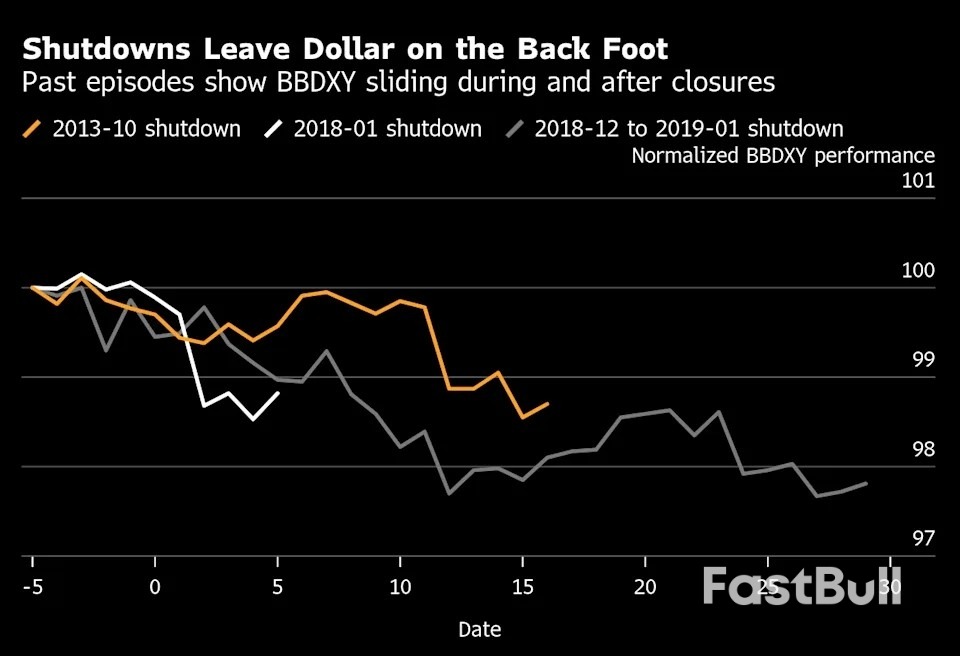
Implied volatility in euro-dollar options tends to rise ahead of shutdowns, underscoring that traders are quick to price in disruption risks. But realized swings tell a different story.
In 2013, spot volatility lagged and only briefly spiked once the shutdown began. In January 2018, expectations and delivery lined up, with realized volatility tracking implied almost one-on-one. By contrast, during the prolonged 2018/19 closure, options priced in turbulence that never fully materialized, as realized volatility stayed subdued through much of the impasse.
It’s no surprise that options sentiment over the next month has shifted back to neutral on the dollar, erasing last week’s modest bullish bias.
“Given greater market sensitivity to US political developments, we would expect modest dollar weakness against the yen, Swiss franc, and euro should a shutdown materialize,” Citigroup strategists Daniel Tobon, Brian Levine and Osamu Takashima wrote in a Sept. 29 note. “However, a quick resolution to the shutdown could lead to limited follow-through, keeping us in similar ranges to recent months.”
By Tuesday afternoon, a shutdown appeared increasingly likely. That would delay the release of key economic indicators, including the monthly employment report scheduled for Friday.
At JPMorgan, strategist Patrick Locke said that the possible shutdown gives “an added layer of significance” to other economic data, including Conference Board, job openings, ISM and ADP figures. August job openings released Tuesday were little changed while hiring was dampened, signaling a steadily slowing demand for workers.
Source: Bloomberg
To stay updated on all economic events of today, please check out our Economic calendar
Copyright © 2026 FastBull Ltd
News, historical chart data, and fundamental company data are provided by FastBull Ltd.
Risk Warnings and Disclaimers
You understand and acknowledge that there is a high degree of risk involved in trading. Following any strategies or investment methods may lead to potential losses. The content on the site is provided by our contributors and analysts for information purposes only. You are solely responsible for determining whether any trading assets, securities, strategy, or any other product is suitable for investing based on your own investment objectives and financial situation.


