

CIBC Lifts Gold Forecast to $6,000 on Fed and Dollar Calls
 Winkelmann
CIBC predicts sharp gold and silver surges, driven by geopolitical uncertainty and dollar weakness.
Despite recent volatility shaking the metals market, analysts at Canadian bank CIBC are doubling down on their bullish outlook for gold and silver, expecting prices to climb significantly by year-end.
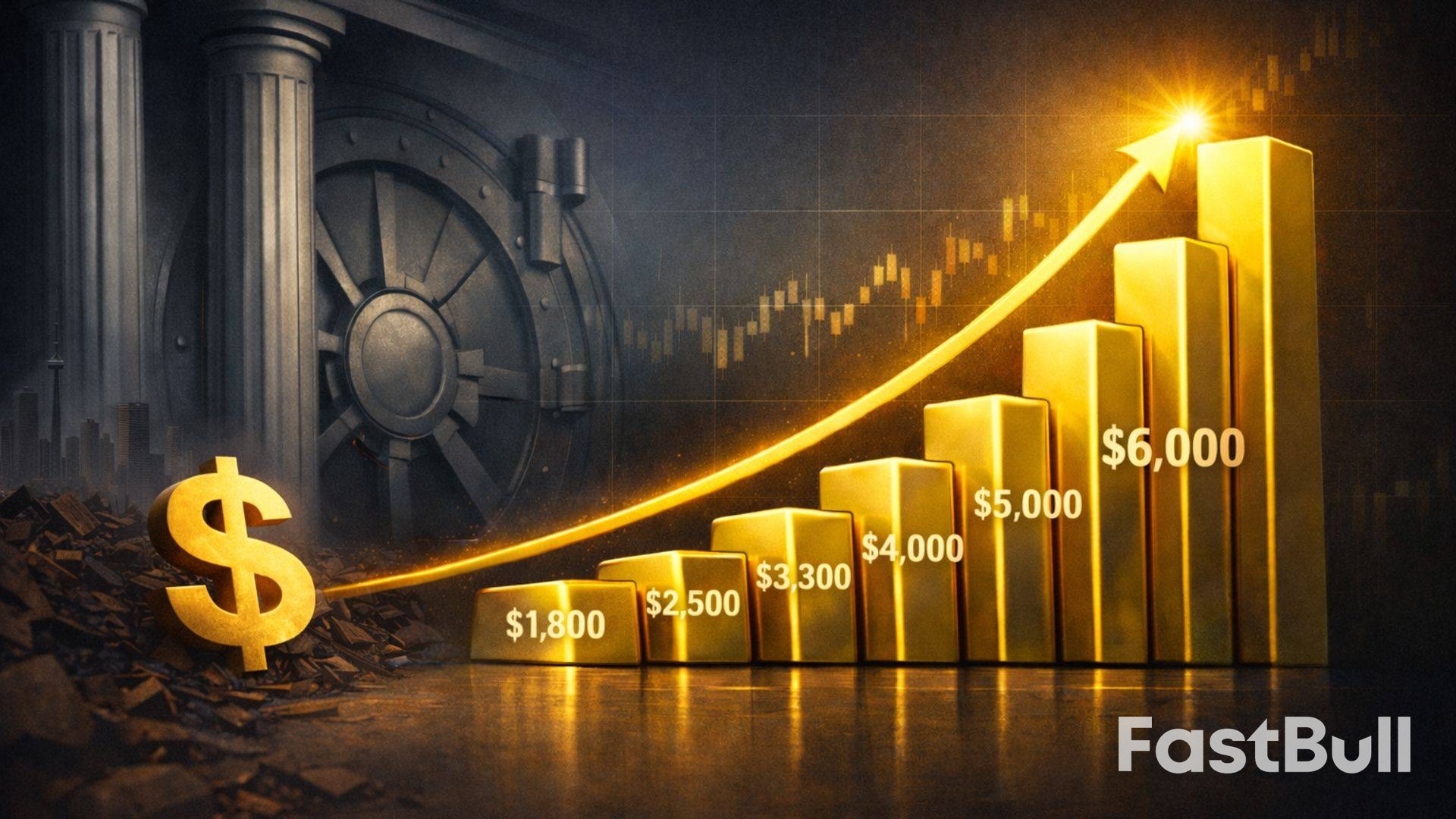
In a recent report, CIBC’s commodity analysts sharply raised their gold price forecast, projecting an average of $6,000 per ounce this year. This marks a substantial increase from their previous estimate of $4,500 per ounce. The bank sees a continued uptrend, with prices potentially peaking at an average of $6,500 an ounce in 2027.
The bullish call comes as gold encounters fresh resistance at the $5,000 level and enters a consolidation phase. Spot gold was last trading at $4,863.10 an ounce. For silver, CIBC forecasts an average price of around $105 an ounce this year, rising to $120 an ounce in the next.
Why CIBC Remains Bullish: Core Catalysts
According to the bank's analysts, the fundamental drivers that supported precious metals in 2025 are still firmly in place, even with the recent price correction. Two factors stand out:
• Persistent Geopolitical Uncertainty: This is expected to continue fueling safe-haven demand for gold.
• Anticipated U.S. Dollar Weakness: This is viewed as a key tailwind that will push gold prices higher.
Analysts noted that "dollar debasement is likely to persist" as central banks and investors react to heightened uncertainty by quietly shifting allocations away from U.S. treasuries. They also anticipate that rate cuts and ongoing tension between the Federal Reserve and the White House will exert further pressure on the dollar.
Decoding the Next Fed Chair: A "Dove in Hawk's Clothing"?
CIBC noted that gold's recent selloff from record highs was triggered by President Donald Trump's announcement that he would nominate Kevin Warsh to replace Jerome Powell as head of the Federal Reserve.
Markets reacted negatively, expecting Warsh, a former Federal Reserve Governor, to tighten monetary policy. However, CIBC analysts describe Trump's pick as a "dove in hawk's clothing," suggesting the market’s initial reaction was misplaced.
Their report states, "Mr. Warsh is seemingly more aligned with a dovish stance than last week's negative market reaction would imply." The analysts point out that Warsh has previously argued for tightening the Fed's balance sheet as a method to control inflation, which would then allow for lower interest rates for "Main Street." More recently, he has supported Trump's government efficiency initiatives as another path to temper inflation and enable lower rates.
Ultimately, CIBC believes that "it is unlikely that any candidate would do anything but guide the Federal Reserve Board to lower rates in 2026."
The Bigger Picture: A Global Shift from Fiat
Beyond U.S. monetary policy, CIBC points to the broader trend of global fiat currency debasement as a long-term catalyst for gold demand.
The report argues that with U.S. Treasuries—the traditional safe-haven asset—no longer considered "risk-free," both investors and central banks are actively seeking alternatives. The options are slim, as most Western economies face near-record debt-to-GDP ratios and are choosing to inflate rather than restrain their way out of the problem.
This environment has eroded investor confidence in fiat currencies, a trend that has directly fueled a "flight to safety" into gold.


