

China's Pragmatic Pivot on Iran's Crisis
 Nathaniel Wright
China's quiet stance on Iran's unrest reveals a pragmatic alliance, valuing convenience over deep conviction.
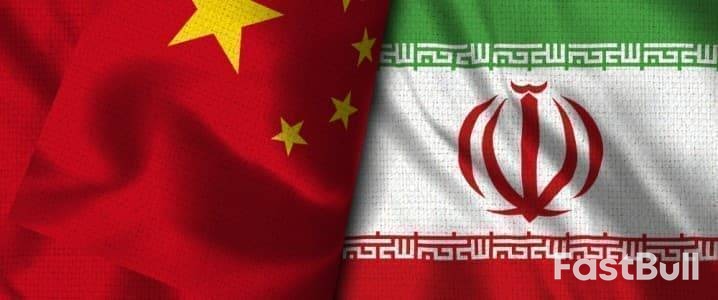
As Iran’s clerical rulers confront one of the most significant threats to their power in years, their key partner, China, is showing increasing hesitancy to intervene. With the United States threatening potential military action in support of Iranian protesters, Beijing’s limited options and quiet stance reveal the true nature of its relationship with Tehran—one built on convenience, not conviction.
Experts argue that this alignment is pragmatic, driven by mutual interests rather than deep-seated trust. This has become clear as Iranian authorities carry out a bloody crackdown on mass anti-establishment protests, which has prompted US President Donald Trump to impose new tariffs and warn of "very strong action" against the country.
Jonathan Fulton, a specialist on China-Middle East relations at Zayed University in Abu Dhabi, notes that while Iran is an important partner, Beijing isn't necessarily committed to the current regime. "I don't think Beijing is particularly wedded to the Islamic Republic," he wrote. "There is utility [for China] in a large anti-Western government in the Gulf, but whether that's run by the Ayatollah or the military or a council of elders, I think Beijing is largely agnostic. As long as the energy flows, they're fine with it."
Beijing's Measured Response
China's official response to the crisis in Iran has been carefully limited. Beijing has focused its public statements on condemning US economic pressure, particularly Trump's announcement of an additional 25 percent tariff on countries doing business with Iran.
"We have always believed that there are no winners in a tariff war, and China will resolutely safeguard its legitimate rights and interests," stated Chinese Foreign Ministry spokeswoman Mao Ning on January 13.
When asked a day earlier about Tehran's violent crackdown, which has reportedly killed at least 2,400 protesters, Mao expressed hope that "the Iranian government and people will overcome the current difficulties and maintain national stability." This cautious wording highlights a desire to avoid direct involvement in Iran's internal affairs.
Oil Defines and Limits the Partnership
The China-Iran relationship is anchored in energy and a shared goal of countering US influence. China serves as an economic lifeline for the heavily sanctioned Iranian economy, purchasing an estimated 90 percent of its oil exports. In turn, Iran supplied roughly 12 percent of China's oil imports, often through a shadow fleet of tankers to circumvent sanctions.
However, this energy dependence is not as critical for China as it once was, exposing cracks in the partnership.
China's Strategic Buffer Against Shocks
According to Joseph Webster, a senior fellow at the Atlantic Council's Global Energy Center, China has been preparing for potential disruptions in the oil market for years. "China has been stockpiling crude oil since 2024," he explained.
Data from commodity intelligence firm Kpler shows that Chinese refineries held between 1.2 and 1.4 billion barrels of oil by the end of 2025. Webster calculates this provides about three months of import cover if supplies were cut off. Furthermore, a substantial amount of Iranian oil remains in floating storage off Malaysia's coast, which China could likely access to further insulate itself from geopolitical shocks.
A Diversified Energy Portfolio
Beijing has also strategically diversified its oil suppliers to avoid over-reliance on any single source. Its major energy partners now include:
• Russia
• Saudi Arabia
• Iraq
• Malaysia
This strategy ensures that even with recent disruptions, such as Washington's strike on Venezuela, China's energy imports remain stable.
An Uneven Economic Lifeline
The trade relationship is deeply asymmetrical. While China is Iran's top trading partner, Iran is a minor player in China's global economic footprint. In 2024, China's official exports to Iran totaled $8.9 billion—a fraction of its $6 trillion in global trade.
In contrast, Iran is highly dependent on China. US sanctions have left Tehran with few buyers for its oil, and Beijing’s purchases, often part of a barter system trading oil for Chinese manufactured goods and technology, have been crucial in propping up the Iranian economy.
Cracks in a Fragile Alliance
Despite formal efforts to deepen ties, friction and unmet expectations plague the relationship. While China supported Iran's entry into the Shanghai Cooperation Organization (SCO) in 2023 and the BRICS bloc in 2024, these diplomatic wins haven't translated into unwavering support.
The landmark 25-year economic cooperation agreement signed in 2021 was met with public skepticism in Iran, partly because its text has never been publicly disclosed. Iranian officials have since urged China to do more to implement the deal, which has yielded limited results due to ongoing international sanctions.
The limits of Beijing’s support were also starkly revealed in June when it did little to assist Tehran after Israel and the United States launched strikes on Iran.
A Plea Met with Public Backlash
Tehran’s appeals for help have not been well-received in China. On January 8, amid a communications blackout and rising death toll, Iran's ambassador in Beijing, Abdolreza Rahmani-Fazli, told state-owned Phoenix TV that Iran would protect Chinese interests and hoped for assistance from "friendly countries."
According to Tuvia Gering, a researcher at the Institute for National Security Studies in Israel, this appeal was met with sharp criticism on China's heavily monitored social media. A popular nationalist account on WeChat, Zhanhao, bluntly dismissed the ambassador's comments: "Iran continues to expect China to take the bullet for it. That's pure fantasy!"
This sentiment underscores a fundamental disconnect. "It confirms what some Iran-China watchers have warned for years," Gering wrote. "Tehran and Beijing do not see the relationship in the same way."


