

China Sells US Debt, Buys Gold in Strategic Shift
 King Ten
China accelerates its "derisking," systematically cutting US debt to 15-year lows while boosting gold reserves.
China appears to be accelerating its "derisking" strategy by systematically reducing its exposure to U.S. government debt while increasing its gold reserves. This financial pivot reflects a broader policy of diversifying assets amid ongoing geopolitical tensions.
US Treasury Holdings Plunge to 15-Year Low
According to data from the U.S. Treasury, China sold another $6.1 billion in U.S. Treasuries in November. This sale brought its total holdings down to $682.6 billion, the lowest level recorded since 2008.
This trend of selling U.S. debt is not new but has intensified since the beginning of the trade conflict with the United States. The move is a core component of China's long-term goal to diversify its massive foreign reserves.
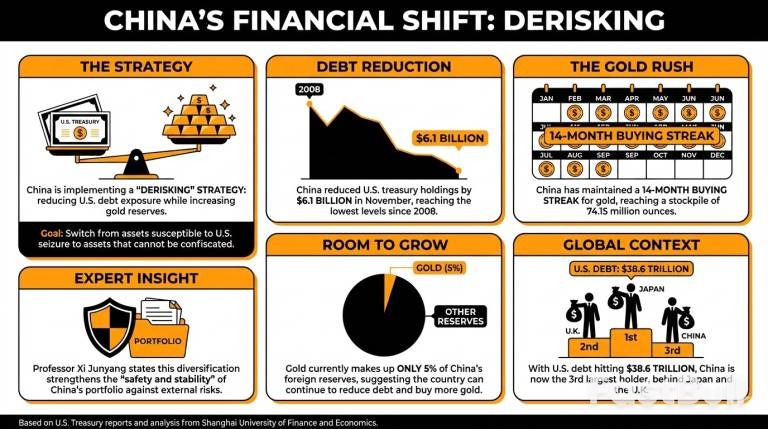
Figure 1: China's financial strategy involves simultaneously reducing U.S. Treasury holdings to post-2008 lows while increasing its gold reserves.
Xi Junyang, a professor at the Shanghai University of Finance and Economics, stated that the reduction is a direct result of a multi-year effort to optimize and diversify foreign asset holdings. This strategy, he explained, is designed to improve the overall safety and stability of the country's financial portfolio.
A Strategic Pivot to Gold Reserves
While China divests from U.S. debt, it is simultaneously accumulating gold. The country is now in the midst of a 14-month gold buying streak. This shift is driven by a desire to move from assets controlled by the U.S. government—and thus susceptible to potential seizure—to hard assets that cannot be controlled or confiscated by third parties.
Currently, China's gold stockpile stands at 74.15 million ounces. However, this impressive figure still only accounts for about 5% of the nation's total foreign reserves. This suggests China has significant capacity to continue selling U.S. debt and converting the proceeds into gold.
Professor Junyang believes this trend will continue, noting that allocating more reserves to gold can enhance the "stability of reserve assets" and strengthen the country's "ability to withstand external risks."
Global Standing and Future Outlook
China's strategic asset reallocation is also happening as it voices criticism over the growth of U.S. national debt, which recently surpassed $38.6 trillion with no signs of slowing down.
Despite the consistent selling, China remains the third-largest international holder of U.S. debt, trailing only Japan and the United Kingdom. This indicates that its "derisking" is a gradual and calculated process rather than a sudden exit from the market.


